
Baiting in Arc Raiders is a high-level tactical progression path that uses the psychology of greed to control enemy movement. Most players in the Exclusion Zone are hyper-focused on resource acquisition, making them susceptible to visual and auditory lures. For players looking to set effective traps and dictate the flow of an engagement, mastering the art of the safe bait forms a reliable framework for victory. It is about appearing vulnerable while maintaining total tactical control.

This guide examines how to approach baiting efficiently, focusing on the “lure and rotate” technique, the use of dead-drops, and the critical importance of having a pre-planned escape route to ensure you don’t become the victim of your own trap.
The Logic of Psychological Manipulation
A successful bait relies on a deterministic understanding of player behavior. Most raiders will instinctively move toward “easy” loot or a “weak” solo player. By presenting one of these scenarios, you force the enemy to abandon their defensive discipline. The goal is to make the reward seem so high that they ignore the risks. This shifts the engagement from a standard gunfight into a controlled execution where the enemy moves exactly where you want them to be.
Safety is the primary concern when baiting. If you are the bait, you must never actually be in danger. This requires you to utilize “passive baiting”—using objects or sound—or “active baiting” from a position where you have an immediate, protected exit. Mastery of this skill allows a solo player or duo to dismantle larger squads by tricking them into overextending into a kill-zone.
Core Tactics: Sound Lures and Loot Dead-Drops
To bait effectively without taking unnecessary damage, you must utilize these proven methods of attraction:
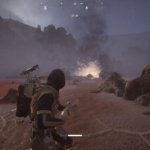
- The Auditory Breadcrumb: Fire a few unsuppressed shots at an AI unit and then immediately relocate to a silent, elevated position fifty meters away. Aggressive players will rush the sound of the fight, expecting to find a distracted or wounded raider.
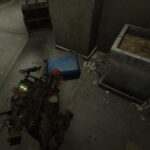
- The Loot Sack Trap: Drop an unneeded item bag in a wide-open area or at the base of a ladder. Position yourself at an off-angle where you can see the bag. The moment an enemy stops to interact with the bag, they are a stationary target.
- The “Fake” Extraction: Call in an extraction and then immediately move away to a nearby ridge. Enemies will often push the landing pad with grenades and tunnel vision, leaving their flanks completely exposed to your overwatch.
Ensuring Your Own Safety: The Escape Variable
The biggest risk of baiting is the “counter-trap,” where an enemy sees through your lure and surrounds you. To prevent this, every bait must be performed near a “hard reset” point. This is an area with unbreakable cover, a vertical exit like a zip-line, or a building with multiple exits. If you are the active bait, your job is to draw attention and then disappear before the enemy can pin you down. Never bait in a dead-end corridor or an open field without utility support.

You must also maintain “eyes on the bait” at all times. If you lose visual contact with the area you are baiting, the trap is dead. Use proximity sensors or teammates to watch the angles you can’t see. By treating the bait as a temporary tool rather than a permanent commitment, you ensure that you remain the hunter. A baiter who stays too long in their position becomes the prey; a veteran baiter knows exactly when the lure has worked and when it’s time to strike or vanish.
Coordinating Team Baiting for Squad Wipes
In a squad, baiting becomes a force multiplier. Assign one player to be the “rabbit”—the visible player who makes noise and runs away—while the other two act as the “trap.” The rabbit should lead the pursuing enemies into a narrow bottleneck or a pre-established crossfire. This is particularly effective against squads who are “thirsting” for a kill and sprinting blindly after a lone target. The rabbit’s job isn’t to fight; it’s to stay alive and navigate the enemies into the kill-box.
This level of coordination requires perfect timing. The trap players must resist the urge to shoot too early. They should wait until the entire enemy squad has committed to the chase and is in the “open” between cover. By synchronizing the strike with the rabbit’s sudden turnaround, the squad can achieve a total wipe in seconds. Integrating these team-baiting routines ensures that you can handle even the most aggressive opponents by using their own momentum against them.
Conclusion: Control Through Greed

Baiting mastery rewards the patient and the strategic. By using loot and sound to manipulate enemy movement, you turn the Exclusion Zone into a controlled environment. Integrating these baiting habits into your daily routine ensures that you are always the one dictating the terms of the engagement, providing a consistent path to victory through superior psychological warfare.


Leave a Reply